Regional Patterns in Promotional Code Redemption for Online Gaming Worldwide
Katja Otto · Jul 30, 2026
Regional Patterns in Promotional Code Redemption for Online Gaming Worldwide
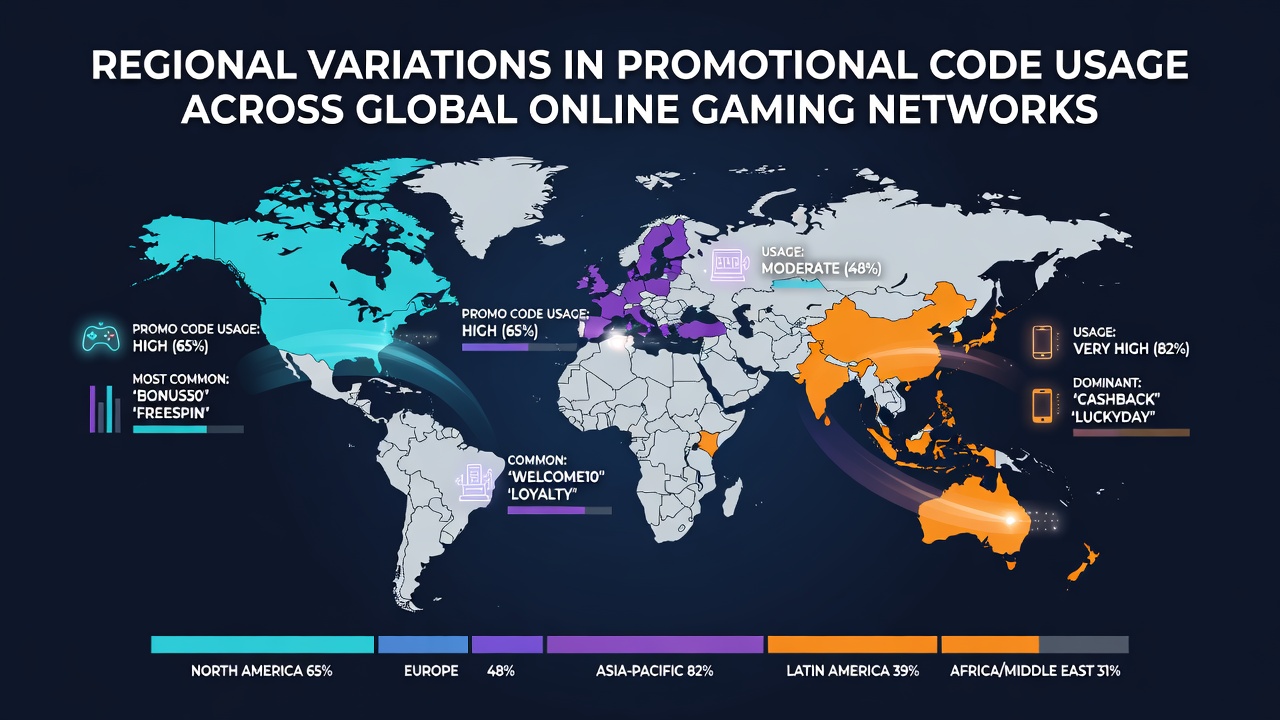
Promotional codes have become a standard feature across online gaming platforms, yet their adoption rates and usage patterns differ sharply by region because of local regulations, player preferences, and network infrastructure. Data compiled through mid-2026 shows that redemption volumes in North America outpaced those in Asia by nearly 35 percent during the first half of the year, while European markets maintained steady mid-tier activity. Observers note that these differences stem from varying legal frameworks rather than any single platform policy.
North American Trends and Platform Adjustments
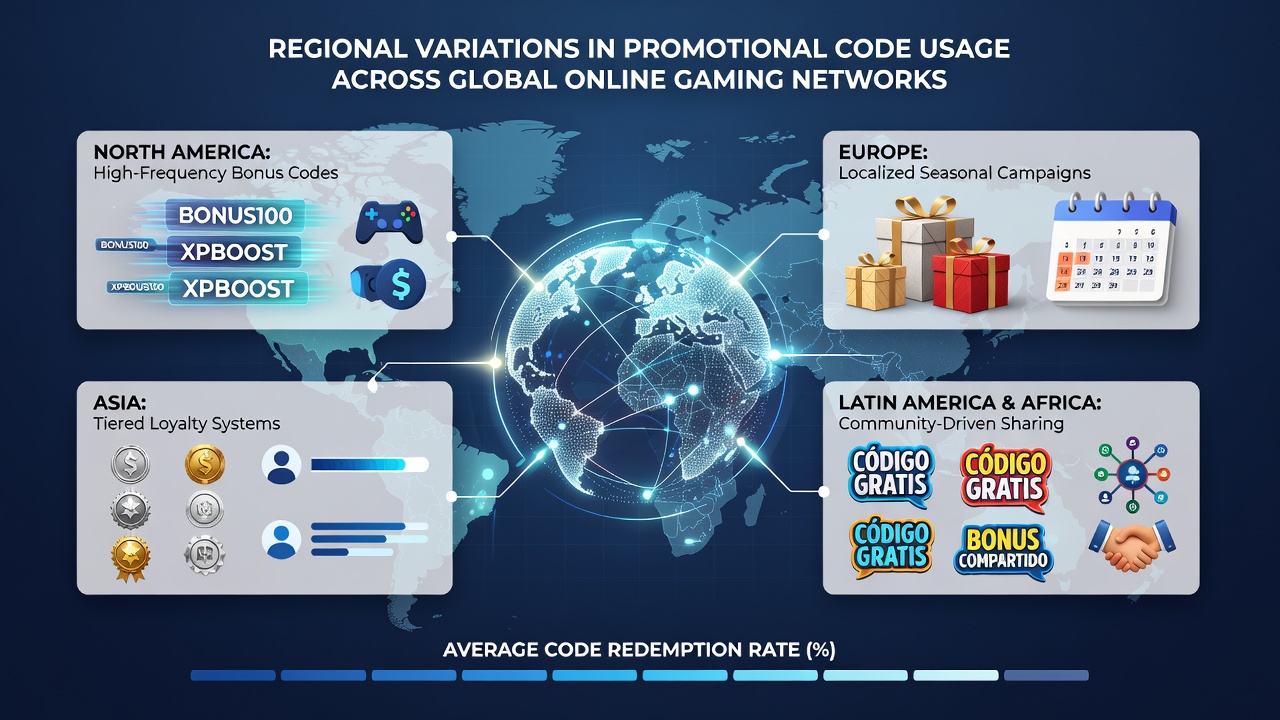
Platforms operating in the United States and Canada have seen promotional code usage rise steadily since the expansion of legal sports wagering in multiple jurisdictions. Figures released by the Canadian Gaming Association indicate that code redemptions for casino-style games increased 22 percent year-over-year through July 2026, driven largely by mobile app integrations that auto-apply offers at signup. In contrast, desktop users in the same region showed lower engagement with layered codes that combine deposit matches and free-spin bundles. One study released by the University of Nevada, Reno tracked over 1.2 million accounts and found that codes tied to specific sporting events performed best in states with recently legalized betting, while generic welcome codes retained higher open rates in provinces with longer-established markets.
European Market Segmentation and Regulatory Influence
Across the European Union, promotional code behavior splits along national lines because licensing rules limit how offers can be advertised and redeemed. Markets such as Germany and the Netherlands require separate verification steps before codes activate, which has slowed overall usage compared with Spain and Italy where streamlined processes remain in place. Research from the European Gaming and Betting Association shows that multi-format codes linking sports wagers to table-game credits saw a 14 percent uptick in southern Europe during the spring of 2026, whereas northern markets favored single-use deposit codes. These patterns hold even when the same parent company runs platforms in multiple countries, suggesting that local compliance shapes player choices more than brand strategy.
Asia-Pacific Variations and Network Scale
Asia-Pacific regions present the widest range of outcomes because some jurisdictions ban real-money gaming outright while others permit tightly controlled operations. In Australia, where state-level oversight applies, promotional code redemptions for virtual sports and card tables climbed 18 percent between January and July 2026 according to data shared by the Australian Communications and Media Authority. Meanwhile, Southeast Asian markets with offshore-focused platforms recorded higher volumes of no-deposit codes, although conversion rates into sustained play remained lower than in regulated Australian environments. Platforms serving Japan and South Korea reported the smallest percentages of code users overall, largely because domestic rules restrict bonus structures and require clear separation between promotional funds and deposited balances.
Latin American Growth and Mobile-First Usage
Latin American networks have shifted toward mobile-first promotional systems, with code redemptions concentrated in Brazil, Mexico, and Argentina. Government reports from Brazil's Ministry of Finance note that cross-platform codes allowing transfers between sports betting wallets and casino lobbies increased 27 percent in the twelve months ending July 2026. Players in these markets often combine welcome codes with ongoing loyalty tiers, creating layered rewards that differ from the simpler single-code models common in North America. Network operators have responded by shortening code validity windows in high-volume regions to manage liability while extending expiration periods in slower-adopting countries.
Cross-Regional Comparisons and Data Patterns
When researchers compare redemption data across continents, several consistent threads emerge. Mobile devices account for the majority of code entries everywhere except Japan, where desktop access still leads. Time-limited codes tied to major sporting events generate the largest spikes in every region studied, although the absolute numbers vary with local event popularity. Those who have examined platform analytics point out that codes requiring multiple steps before activation lose users at higher rates in emerging markets than in mature ones, a gap attributed to differing levels of digital payment familiarity rather than offer quality itself.
Conclusion
Regional variations in promotional code usage across global online gaming networks reflect a combination of regulatory environments, device preferences, and market maturity. Data gathered through July 2026 demonstrates that platforms must tailor code structures to local conditions instead of applying uniform global campaigns. As new jurisdictions continue to legalize or refine online gaming rules, these geographic differences are expected to persist and evolve in line with each area's specific oversight requirements.